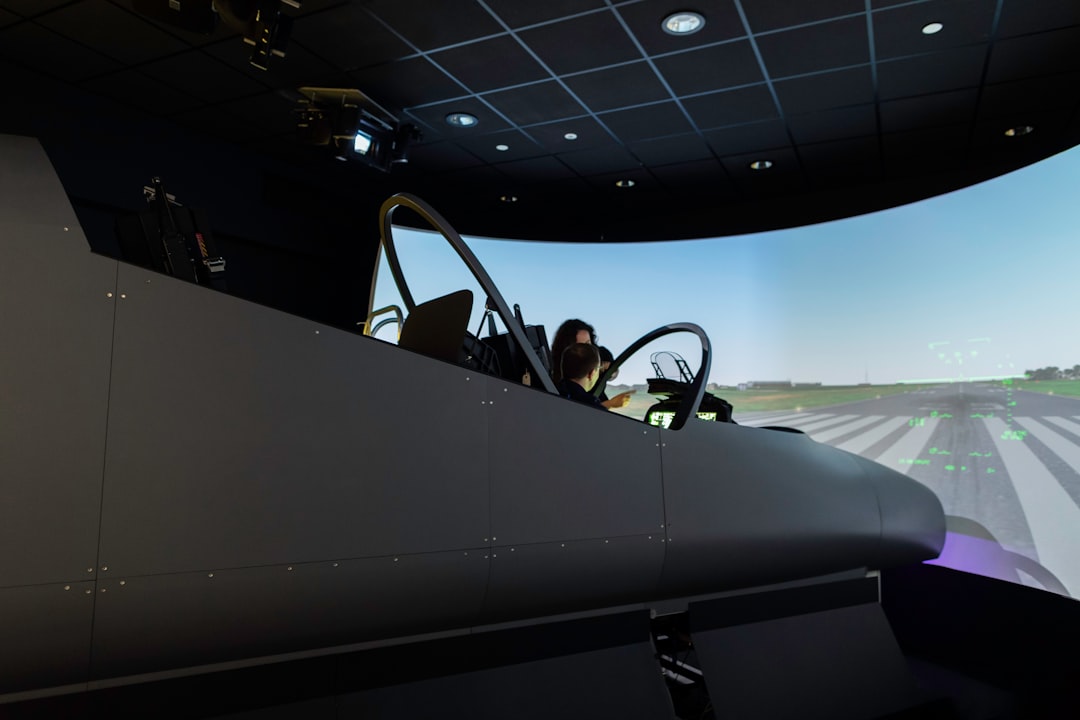
The landscape of professional aviation is undergoing a transformation that is both profound and practical. By 2026, the path to earning a commercial pilot certificate or an airline transport rating no longer relies exclusively on the legacy systems of the past. The industry has fully embraced a digitally integrated ecosystem that redefines how pilots learn, practice, and prove their competence.
This shift is not a futuristic concept; it is the current standard. For aspiring professionals, understanding the mechanics of modern training is essential for making informed decisions about their career trajectory. This guide provides the technical facts required to navigate the 2026 standards of pilot education.
Beyond the Steam Gauge: The Digital Cockpit Revolution
The era of the “steam gauge”—the traditional round dial instruments—as the primary training platform is effectively over. Modern training programs have transitioned to glass cockpits as the default environment. This isn’t merely an aesthetic upgrade; it represents a fundamental change in how information is processed and how decisions are made in the air.
Flight schools and airline academies now prioritize training on advanced avionics suites from the first lesson. This ensures that graduates are immediately productive in the aircraft they will fly commercially. The digital cockpit demands a different cognitive skill set, focusing on automation management and system integration rather than raw instrument scanning.
- Primary Flight Displays (PFD): Replaces the six-pack with a single, intuitive screen showing attitude, airspeed, altitude, and heading.
- Multi-Function Displays (MFD): Provides moving maps, weather radar, traffic information, and engine monitoring.
- Flight Management Systems (FMS): Allows for advanced navigation planning and autopilot programming.
Extended Reality (XR) and Mixed Reality (MR) in Training
One of the most significant technological adoptions in recent years is the use of Extended Reality (XR) and Mixed Reality (MR) for procedural familiarization. These tools are no longer experimental; they are integrated into the core curriculum of forward-thinking training organizations.
XR headsets allow students to sit in a virtual cockpit, manipulate switches, and run checklists without the cost or risk of a live aircraft. MR takes this a step further by overlaying digital instruments onto a physical space, allowing for muscle memory development while interacting with real-world controls.
Key Advantages of XR and MR
- Procedural Familiarization: Students can practice emergency checklists and normal flows hundreds of times in a safe, repeatable environment.
- Muscle Memory Development: MR systems train the physical movements required for switchology and control inputs.
- Cost Reduction: Significantly lowers the cost per hour of procedural training compared to full-motion simulators.
- Accessibility: Training can be conducted at any time, reducing scheduling bottlenecks.
Competency-Based Training and Assessment (CBTA)
The regulatory framework has evolved from a purely hour-based system to one that prioritizes demonstrated skill. Competency-Based Training and Assessment (CBTA) is the new benchmark for both initial and recurrent training. Under this model, a pilot advances not because they have sat in a seat for a specific number of hours, but because they have proven they can perform specific tasks to a measurable standard.
This shift places a premium on the quality of training over the quantity. It requires instructors to be more analytical and students to be more accountable for their own learning outcomes.
- Focus on Performance: Assessment is based on observable behaviors and technical proficiency.
- Personalized Learning: Training can be tailored to address individual weaknesses rather than following a rigid syllabus.
- Data-Driven Feedback: Objective data from simulators and aircraft systems informs the evaluation process.
- Efficiency: Reduces the time and cost required to reach a professional standard of proficiency.
Zero-Flight-Time Type Ratings
One of the most compelling developments in modern aviation training is the “Zero-Flight-Time” (ZFT) type rating. This concept, approved by regulators like EASA and increasingly recognized by the FAA, allows a pilot to obtain a type rating on a specific aircraft model without ever flying the actual airplane.
ZFT relies entirely on high-fidelity simulators that have been qualified to a Level D standard. These simulators are so accurate that the skills learned in them transfer directly to the aircraft. For airlines, this is a game-changer for efficiency, allowing them to train pilots on new fleet types without pulling revenue-generating aircraft from service.
Mechanics of a ZFT Rating
- Full Simulator Training: All maneuvers, systems failures, and emergency procedures are practiced in the simulator.
- Validation Flight: A brief flight in the actual aircraft is conducted to validate the training, but no instruction occurs.
- Regulatory Approval: Requires specific authorization from the governing aviation authority.
- Cost Savings: Eliminates the fuel, maintenance, and insurance costs associated with training in the aircraft.
AI-Powered Debriefing and Performance Analysis
The integration of artificial intelligence into the debriefing process is perhaps the most transformative aspect of modern training. Gone are the days of subjective feedback based solely on an instructor’s memory. AI-powered tools now analyze every maneuver against industry benchmarks, providing objective, granular data on pilot performance.
These systems record parameters such as altitude deviations, airspeed control, bank angles, and power settings. They then compare this data to a gold standard derived from thousands of professional pilots. This allows for precise identification of weaknesses and targeted remediation.
- Objective Metrics: Removes bias from the evaluation process.
- Trend Analysis: Tracks performance over time to show improvement or degradation.
- Instant Feedback: Pilots can review their performance immediately after a session.
- Benchmarking: Provides a clear standard against which to measure progress.
New Regulatory Pathways for eVTOL and Electric Aircraft
The emergence of electric vertical takeoff and landing (eVTOL) aircraft and other advanced air mobility (AAM) vehicles has created entirely new regulatory pathways. These aircraft require a different skill set from traditional fixed-wing or rotorcraft operations, and training programs are being developed specifically for them.
Regulators are working closely with manufacturers to establish type rating requirements and training syllabi for these novel platforms. This includes specific training on battery management, electric propulsion systems, and the unique flight characteristics of distributed electric propulsion.
- New Type Ratings: Specific certificates are being created for eVTOL aircraft.
- Battery Management Training: A critical component of safe electric aircraft operation.
- Transition Training: For pilots moving from traditional aircraft to eVTOL platforms.
- Regulatory Guidance: FAA and EASA have published draft frameworks for AAM training.
Navigating the 2026 Standards
For the aspiring professional pilot, the path to certification in 2026 is more efficient and data-driven than ever before. The key is to seek out training programs that have fully integrated these technologies and methodologies. Look for schools that offer XR familiarization, use AI-powered debriefing tools, and operate under a CBTA framework.
Understanding the mechanics of Zero-Flight-Time type ratings and the nuances of eVTOL training will also position you ahead of the curve. The industry is moving quickly, and the pilots who are most adaptable to these new tools and standards will have a significant advantage in the job market.
The modern pilot is not just a stick-and-rudder operator; they are a systems manager, a data analyst, and a critical thinker. The training ecosystem has evolved to build exactly that type of professional. By embracing these changes, you can accelerate your path to certification and build a more robust foundation for a successful career in aviation.
- Water Damage 2026 – 23/04/2026
- Roofing Systems 2026 – 23/04/2026
- Plumbing Systems 2026 – 23/04/2026

Leave a Reply